AG FEST WAS FOR THE PEOPLE

Updated: Sep 30
A day where music, community and opportunity met under the London sun.

“The audience wasn't an accessory to the festival. They were the reason it existed.”
THE WAY IN
Some moments you plan for. Others you simply have to believe will happen.
Back in January, when AG FEST was beginning to take shape, I remember telling my manager that I wanted to shoot it. Not simply attend it. Not simply take a few photographs and enjoy the performances. I wanted to document it.
There was something about the idea of DJ AG putting together his first festival that felt bigger than another date in London's summer calendar. AG had spent years building a community around music, discovery and genuine interaction, finding artists and personalities in places most people would simply walk past.
His festival felt like the natural extension of that. A space where the people who had helped build the culture could finally occupy the same space.
And somehow, months after saying I wanted to be there with my camera, I found myself walking through the gates.
I hadn't secured a media pass through some grand industry introduction. I was invited through Malaika Temba, an incredible artist performing on the Discovery Stage. Only a select group of artists from AG's shortlist had been chosen for that stage, and the artists were even gifted PUMA pieces as part of the experience.

That was my way in. The rest was up to me.
A FESTIVAL THAT FELT DIFFERENT
AG FEST was unlike the larger festivals I had previously experienced. For one, it was genuinely family-friendly.


At first, that changed the way I approached my camera. I was conscious of photographing children without context, particularly when I was there in a documentary capacity. I didn't want to manufacture moments that weren't mine to manufacture. I wanted to capture children enjoying the festival naturally, whether that was getting their faces painted, dancing alongside their parents or simply taking everything in.
I wasn't just documenting a festival anymore. I was documenting people experiencing culture together.

THE CROWD

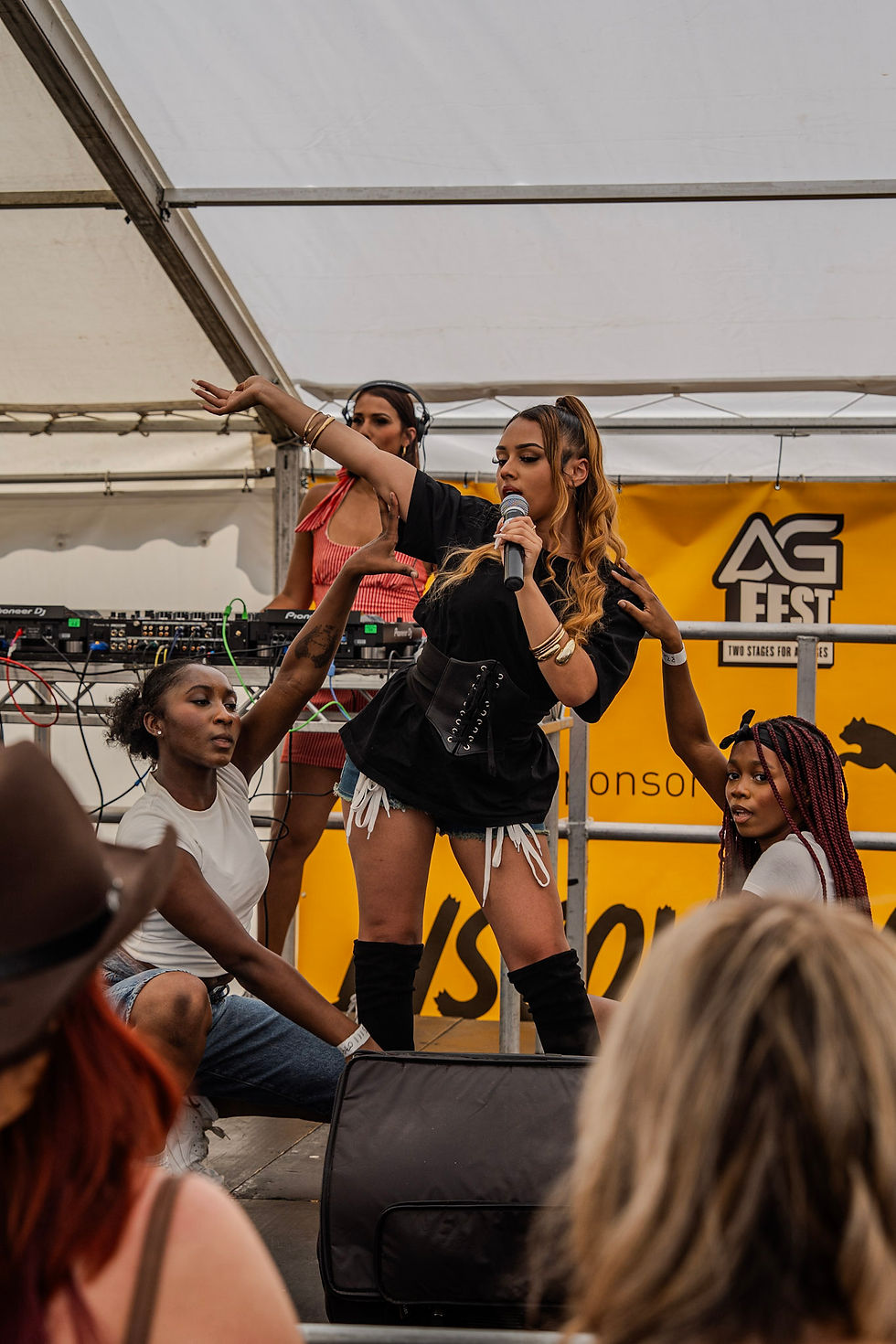
Then the Discovery Stage performances began rolling through. The music started pulling people together.
Older heads were dancing. Younger people were dancing. Parents were singing along. Children were watching performances with the same curiosity as everyone else.
The camera eventually stopped feeling like something I was carrying around and started feeling like an extension of how I was experiencing the day.

And there was plenty to document. The smell of food travelled across the field. Queues formed around vendors, some established and award-winning in their crafts, others smaller businesses and creatives simply being given a space to put what they had in front of a crowd.
There were face painters. Herbal and handmade products. AG merchandise. Food vendors. PUMA and Garnier had their own spaces, giving people the chance to collect products, interact with the brands and even meet AG himself.
It didn't feel like a marketplace that happened to sit inside a festival. The businesses were part of the ecosystem.
And that felt important. Because AG has always seemed particularly interested in finding people who might otherwise be overlooked. AG FEST simply scaled that philosophy up.
THE PEOPLE'S FESTIVAL


The main-stage lineup alone told you what kind of day this was. This wasn't a festival built around one particular generation. It was a bridge between them.
You could look across the crowd and see parents creating memories with their children, couples dancing together, friends reconnecting and people singing songs that had travelled through completely different eras of British music.
The sun was out. The sky was clear. People were smiling.
You would hear one song being sung word-for-word by someone who grew up with it, while someone half their age was discovering it in real time.
The music was the common language. But the community was the story.

THE BRIDGE
I saw AG making his way through the crowd. I had originally thought about stopping him.
I could have introduced myself. I could have explained that I was there documenting the festival. I could have told him who had brought me. I could have shown him some of what I had already captured.
But watching him walk through that crowd made me reconsider. He couldn't move five yards without someone congratulating him, asking for a picture or stopping to have a conversation. There was no separation between him and the people who had come to celebrate.
So instead, I watched.


Earlier in the day, I had seen AG's main photographer, Chester, at the Discovery Stage. His daughter had been on the microphone, MCing and helping conduct the stage alongside Amina Ezer.

I realised I had been given another opportunity. Not necessarily to get closer to AG himself, but to connect with someone who was already part of the machinery documenting what AG was building.
So I tapped Chester on the shoulder.
"Bro, I'm so sorry to disturb you, but I just wanted to let you know I've got some BTS shots and videos for you as well while we watch AG do his 'man of the people's' walk."
And just like that, the conversation opened. I asked what he was shooting on that day. We spoke. And what could have been a passing interaction became something much more meaningful.
I had arrived at AG FEST without knowing a single person on the main team. I left knowing exactly where I could send my work.
Chester told me he'd spoken to someone on the team and asked them to keep an eye out for my message. My DM to the festival page was actually seen, and suddenly I had a direct email address to send the available work.

That moment reminded me that sometimes the opportunity isn't necessarily the person standing in front of you. Sometimes it's the bridge.
DISCOVERY
What happens when someone sees you before everyone else does?
I experienced another version of that same philosophy when I spoke to JXEYBOY, one of the rising talents performing on the Discovery Stage.
His story with AG is particularly fitting for a festival built around discovery.
JXEYBOY told me about first appearing on one of AG's TikTok Live shows, where AG searches for emerging talent. What happened afterwards wasn't simply a moment of exposure. AG took an interest in him, put him under his wing, gave him and his friends a platform and helped create a new space for them to showcase their creativity.

That story says something about AG that a stage lineup can't.
Because putting someone on a festival poster is one thing. Giving someone a platform before everyone else knows their name is another.
The festival wasn't only showcasing established names. It was creating a pathway between where someone is and where they could potentially go.

FUNKY DEE: A BRIDGE BETWEEN ERAS
If AG FEST was about bringing generations and chapters of British music together, there are few better people to speak to than someone who has lived through those chapters himself.
Funky Dee, born Dean Smith, is one of the recognisable figures of the UK Funky and Grime landscape. From his early days in the grime scene to "Are You Gonna Bang Doe?" in 2009, his career sits comfortably within the lineage that AG FEST was celebrating.
But speaking to Funky Dee about the festival wasn't about looking back. It was about asking what happens when the culture that raised you keeps moving, and what it means to still be here.

So we messaged him in the group chat afterwards to get his take on the festival here's how it went.

Talk me through how you got to where you are now. Was there a turning point?
"It's been a journey still," Funky Dee said. "I've just always been around music and stayed true to what I do. There wasn't really one specific moment where everything changed. It was more about putting the work in, learning from every chapter and understanding who I am as an artist. The real turning point was when I stopped trying to sound like anyone else and just started doing me properly."
Your sound's distinctive. What were you listening to when you were finding it, and what still influences you now?
"I've always listened to a bit of everything. Hip hop, garage, grime, R&B, Dancehall, all of that. I was taking different things from different places without even really thinking about it. I think that's where my sound came from naturally." He paused. "Even now I'm still inspired by what's happening around me. The streets, the culture, different artists, different sounds. You've just got to keep your ears open."
It's clear Funky Dee wasn't gatekeeping a sound or protecting a legacy. He was listening, adapting, staying alive to what was happening around him.
When you're in the studio, what are you actually trying to achieve? Is it about the song, the feeling, or something else?
"For me it's always about the feeling. You can have the maddest production and the best lyrics, but if there's no feeling there then it doesn't really mean anything. I want to make something that people can connect with. Sometimes you go into the studio with an idea and end up somewhere completely different. That's normally when you know you've got something special."
What do you reckon people are actually connecting with when they listen to your stuff?
"I think people connect with the fact that I'm being myself. There's no fake energy. What you see is what you get. I want people to feel good when they hear my music. Whether that's confidence, motivation, nostalgia or just wanting to have a good time. If I can give someone a feeling through a song, then that's what it's all about."
It's a simple philosophy. But at a festival where three generations were standing side by side, all finding something in the same music, that honesty made sense.
You've played everything from small rooms to festivals. How does the context change what you do?
"Every crowd is different, so you've got to feel the room and understand what people are on. A club is different from a festival and a festival is different from a smaller venue. You've got to bring the right energy for the moment." He looked around at the field, at the families, at the mix of ages. "Being at AG FEST was special though because you've got different generations all coming together for music. Seeing young people and older people enjoying the same culture together is a beautiful thing."

How do you think about the balance between the music side and the actual career side of it?
"You've got to understand that the music is the passion but the career is the business side of it. You need both. I've been through different eras of British music, so I've seen how much things can change. You've got to adapt but you can't lose yourself in the process. For me it's about staying true to who I am while understanding how the industry is moving."
Did anything stand out to you watching the other performances?
"Yeah definitely. There's some serious talent coming through. What I like is that the younger generation aren't scared to be themselves and experiment with different sounds. That's important. You don't want everyone sounding the same. Watching the new artists actually gives me energy as well because it reminds you that there's always another wave coming through and you've got to keep pushing yourself."
Where do you see it going for you? What's next?
"I just want to keep growing and doing things I haven't done before. More music, more collaborations, bigger stages and just exploring different sides of myself creatively. Everything is changing so quickly now with the way people consume music, but I see that as an opportunity rather than a problem. I want to evolve without losing the essence of who I am. At the end of the day I want people to hear something and instantly know it's Funky Dee."
THE LAST FRAME
AG FEST was for the people.
By the time I left, I didn't feel like I had simply attended a festival. I felt like I had witnessed a piece of British culture saying thank you to itself.
To the artists. To the DJs. To the parents. To the children. To the vendors. To the photographers. To the people who turned up. To the people who have kept these sounds alive long after their supposed moment had passed.
And to the people still waiting for someone to notice what they can do.
I came wanting to capture AG FEST. Instead, AG FEST reminded me why I capture things in the first place.

Because culture moves quickly. People move quickly. Moments disappear.
But when you slow down enough to look properly, you realise you're standing inside something that might only happen once.
AG FEST felt like one of those days.
A day where generations met. Where established names shared space with emerging voices. Where small businesses stood beside global brands. Where a young artist could find a platform. Where a photographer could find a bridge. Where parents danced with their children.


Where the audience wasn't an accessory to the festival. They were the reason it existed.
AG FEST WAS THE PEOPLE.
A first-person cultural field note by Colten Tuso and Valentina Reynolds.