In conversation with lockdownT

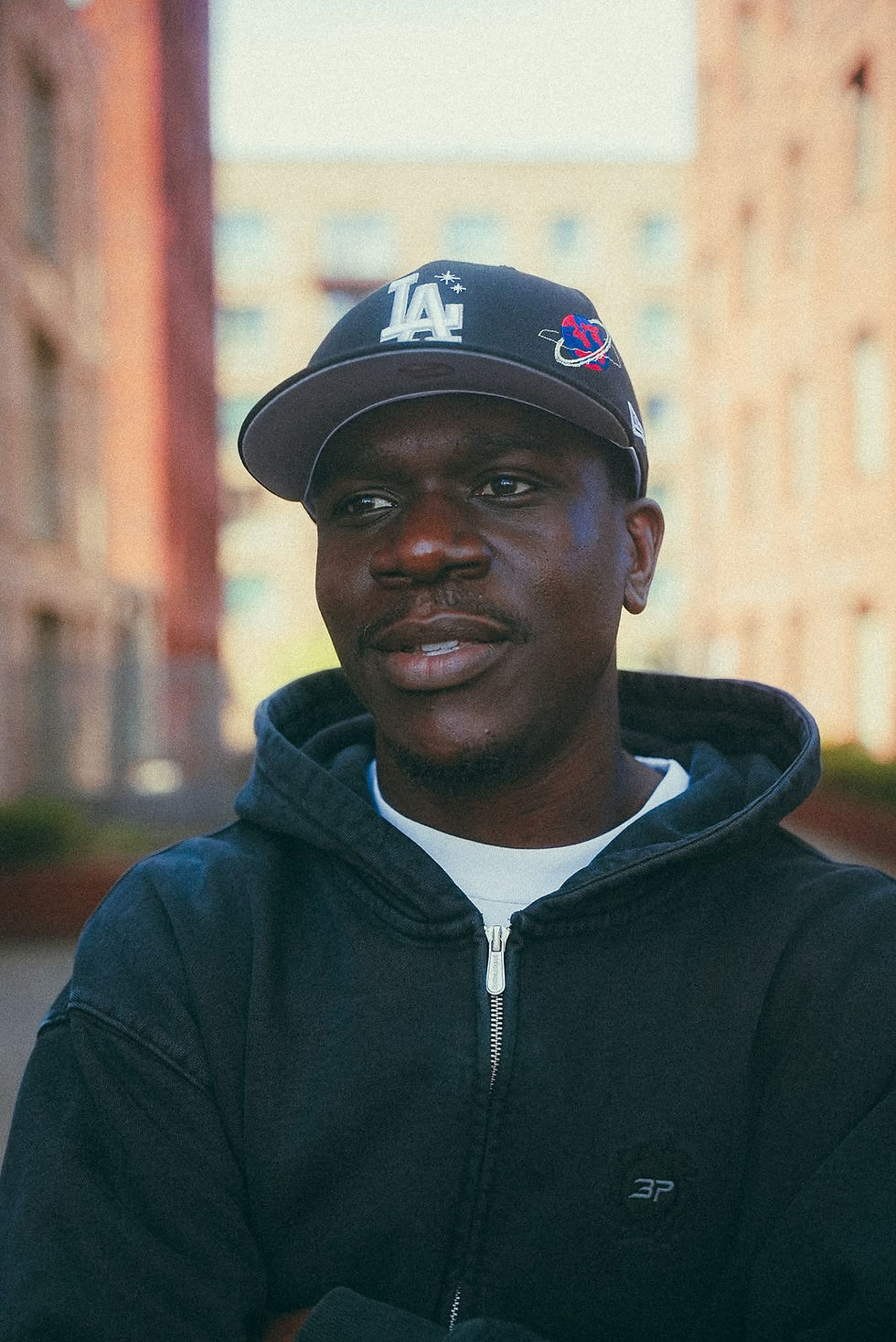
The creator landscape right now is chaos. Everyone's supposed to have a brand, a niche, a lane. Pick one thing and own it. But that's not how culture actually works anymore. You've got artists doing acting, presenters launching podcasts, TikTokers moving into music. The lines are blurred and honestly, they're more interesting that way.
lockdownT sits somewhere in the middle of that. Music, acting, presenting, content creation. 1.1 million people following him on TikTok, massive reach on Instagram, hosting events, working with brands. It sounds like he's everywhere. But the question is whether that's sustainable or if it's just noise. How do you actually juggle all of that without losing yourself? How do you build something coherent when you're moving across so many different spaces?
This is a first conversation, and we wanted to understand how he thinks about all of it. Not as separate things he does, but as one thing. What's the strategy? What's the exhaustion? What actually connects it all?
Let's start with the thing everyone notices first. Music, acting, presenting, content. On paper that's four careers, yet when you watch your stuff it doesn't feel scattered. How do you think about it all? Are these lanes feeding each other, or are they separate?
It's very evident that I sit in quite a few different lanes. That's always been my superpower, and to some detriment at the same time. As creators, we don't like to be boxed. That's one thing I hate. I don't want someone to look at me for just the one thing, because then it feels like I can't step into other fields that might push my creativity. That's why I tap into so many different lanes.
The reason they don't feel separate is because they're all linked to my personality in some way. If you enjoy my content, it's because you enjoy my persona. Music comes under my personality because the type of music I like reflects who I am. Acting comes under it because even though I'm playing characters, you can tell I'm a fun, energetic type of person, and that spills nicely into my presenting too. It's the energy I have naturally, how my spirit is, and that feeds into everything I do.

I won't lie, sometimes I've been confused by how many things I've been trying to do.
I think a lot of creators and people reading this interview in general can relate to this.
But it's not about how many you do, it's about the purpose of each one. You could be doing ten different things, but if they're all aligned and they all go towards one goal, you're not confused. If you're doing a bunch of things that don't align in any way, that's when you start to feel confused and you start to burn out. That's happened to me before. So it's about realigning, zeroing in on what I feel is important, and going from there.
You keep coming back to energy and personality, and it shows. Whether it's a TikTok or a stage at an event, you show up the same way. Is that something you work at, or is that just you?
My answer to the first question leads into this one a bit. I wouldn't say it's intentional. Naturally, my energy and my spirit blend into everything I do, which is why it might feel consistent to you, and I really appreciate that. It's not something I think about, like how can I make sure each way I present myself feels consistent? It's just natural, it's how I like to be. I feel like the most important thing when you're presenting yourself in the public eye is to be as honest as possible. That's what I try to do every time.
That honesty must matter even more when you're the one holding the mic. You've hosted Limitless Live, the Youth Music Awards, events built around bringing people together. What separates actually hosting something from just turning up?
The difference between just showing up and actually hosting with quality is research and preparation.
Understanding why you're there in the first place is key. Once you understand that context, you can bring the right energy and the right context to your hosting.
Building authentic relationships helps too, like with Tolu Farinto, the founder of Limitless Live, or working with the Youth Music team multiple times on different projects. It's allowed me to understand their company ethos and what they're really trying to do. It also helps that I align with those causes myself, so I can bring that into every hosting or presenting gig I do.

So a lot of the work happens before you're even in the room. I'm curious whether that's true online too. TikTok's For You Page drives most of your traffic, and that doesn't happen by accident. When you're making content, are you thinking about the algorithm, or something else?
When it comes to posting on TikTok and other platforms, I am thinking about the algorithm in some senses. Let me explain. TikTok's algorithm is very strict, very set. So I don't post many variations of my content on TikTok other than my studio sessions, because I know that's what works and performs well. I've tried posting interviews, or a slick, corporate-style branded video from an event I've hosted, and it just doesn't work. So now I'm like, cool, it's set. I know what it wants from me, and I post what it wants.
With Instagram you can be more flexible. You can post a variety of things and the algorithm will actually reward you for it. So my posting habits depend on the platform. To be fair, I am thinking algorithmically when I post.
But in the same breath, on Instagram particularly, I'm really pushing a thing of posting what I want right now. I've got some acting work coming out that's over two and a half minutes long. A lot of people would say you shouldn't do that for short-form content. But if it's a good quality piece of work, that's what I care about. The algorithm will find the audience for me. I'm a big believer in that right now.

I like that you'd back quality over the rulebook. Brands must test that instinct too. You've worked with Spotify, Netflix, McDonald's. How do you decide what to say yes to? What makes a partnership feel right rather than just another payday?
The key to a partnership feeling authentic is if I actually use the service or the product. If I haven't before, then maybe it's about trying it out and seeing whether I enjoy it myself. And if there's none of that, it's about figuring out whether there's something I could create that's actually going to slap. If I can make a good piece of content that works with that brand, I'm all down for finding new creative ways to push myself.
The collab has to make sense. It can't be too random. I don't want to promote something I've never used, or something I feel is unsafe or not good for you. I'm not someone who gambles or bets, and I've had a few of those in my inbox. I've said no to them because that's not me. It has to align with my values. But ultimately it's also about whether I feel I can create a great piece of content from the brief.
Turning down betting money says a lot. Something else I've noticed is that you always seem to be where things are happening. Festivals, launches, events, posting as it unfolds. It's almost like you're documenting culture in real time. Is that deliberate, or is that just where you end up?
It's a mixture of both. Naturally, that's the space I'm in. I'm here, I'm there. I like going out, I like experiencing new things. I'm outside, I'm tapped in.
At the same time, I guess it's a credit to where I've got myself in this industry
because now I'm getting invited to these places. I'm getting told what's happening before it goes out to the public sometimes. So I can be there and cover things before other people, or be one of the first. I've got myself into a position where people respect me and come to me, either for promotion or like, "T, we'd really love for you to be here to show your audience." So yeah, it's a mixture of both.

That kind of access only comes with trust, from the industry and from your audience. Your community follows you across platforms and pushes your stuff to people who've never heard of you. What are you giving them that keeps them coming back, especially now you're building beyond the studio sessions?
I feel like people are showing up for me because I'm pushing my creative barriers more and more.
I'm really trying to show everyone that it's not just studio session TikToks. Now I'm offering a music platform with the T-Zone. It's a platform made for creators, built by creators. You can tap into music articles and journalism there, music commentary on YouTube, short-form reaction videos on Instagram and TikTok. That's one of the things I'm offering away from my usual short-form content.
As well as that, I've got a show called Nine:Sixteen. It's basically a social media version of Gogglebox. We react to the most viral videos online and chat, discuss and banter about them, in a podcast-style format. I'm linking up with brands like Wingstop, Red Bull and Spotify.

I'm also pushing the boundaries of my original content with the studio session videos. I'm elevating them, giving them different angles, and writing scripted scenes that come before the studio session. And I'm showing my acting a lot more with scripted stuff that moves away from the studio sessions.
So I'm giving people a lot of different things to latch onto.
They don't just know me for one thing, which is why they can appreciate all the different formats, even though it still feels like the same energy and the same delivery from lockdownT.
That's a lot of new ground. The T-Zone, Nine:Sixteen, the scripted work. Your audience skews male and 25 to 34, but it reaches people all over the world. As you move into new things, how much does knowing who's watching shape what you make, and how much is it just making what you think is good?
I definitely find understanding my audience and knowing the analytics important, and with what I'm about to move into, I'm going to focus on it way more. But up until now, it's been about creating good content and seeing where it lands. That's what I've always done, and that's how my audience found me.
Now that I have the audience, I can start targeting them specifically with certain things I put out, like my acting work. The stuff I put out relates to me, which means it relates to those people. So it still feels authentic, but I know who I'm trying to target. It's a mixture of the two really.
You keep mentioning the acting. It sounds less like a side project and more like where things are heading. How does it fit into what you're building? Is it its own thing, or part of the same conversation?
I think acting is part of the same conversation as everything I've been doing. My main style of content, the studio sessions, is so heavily acting-based. I'd say it's 50% acting, 50% music, so I've been combining the two all along.

Now it's about showing people I'm not just a mime, facial-expressions kind of guy. I can act through a script as well. I can make you believe I'm someone else and tell a story that isn't my own. That's what I'm really pushing for right now, and there's a lot more of that to come.
I've been working heavily with a few different creators and directors. One of my guys, Cal, is an amazing cinematographer and director (production company @drunkenoodless). We've been cooking up a bunch of stuff and I'm hoping the world sees it very soon. When it drops, I think you're going to be very impressed.
I also work with my day-to-day videographer, Timothy. He's great. He's pushing himself to elevate his execution and go down a more cinematic route. I'm keeping people around me who are going in the same direction as me. I think that's the most important thing you can do.
Last one. We've talked about platforms, brands, numbers. Put all of that to one side. What do you actually want people to take away from everything you're doing?
Realistically, I want to inspire people and help them understand that the life I live isn't so far away from the life they could live. I was once in a nine to five, in a job I didn't feel was right for me. It wasn't my purpose. I believe that through faith in God and hard work, I was able to do what I do now, and I want people to feel like that's real for them too.
That's my key. It's about actualising your potential and really going for it. There are a lot of things I'm doing, so it's hard to pinpoint one, but the overarching theme is trusting yourself, working hard at something, and knowing you can achieve it. And having a purpose for why you're doing it, not just doing it aimlessly.

What stands out talking to lockdownT is that he's not trying to be a brand.
He's trying to be useful. To be there when culture happens. To present it, comment on it, amplify it, celebrate it. The multi-hyphenate thing isn't about being everywhere at once. It's about understanding that culture doesn't exist in one lane. It lives across music and film and live events and social moments. And if you're paying attention, you can move through all of it and make sense of it for other people.
That's harder than it sounds. Most creators pick a lane and stay there. lockdownT keeps moving, and makes it all feel connected.